
Services / Brakes
Mobile Brake Service — Pads, Rotors, Calipers, ABS
Our original service, and the most requested one in summer: more kilometres, more luggage, more trips to the cottage — brakes take a beating during peak season. Pads, rotors and calipers replaced right in your driveway, with a confirmed price before you book. Brake fluid flush included when needed.
Get My Quote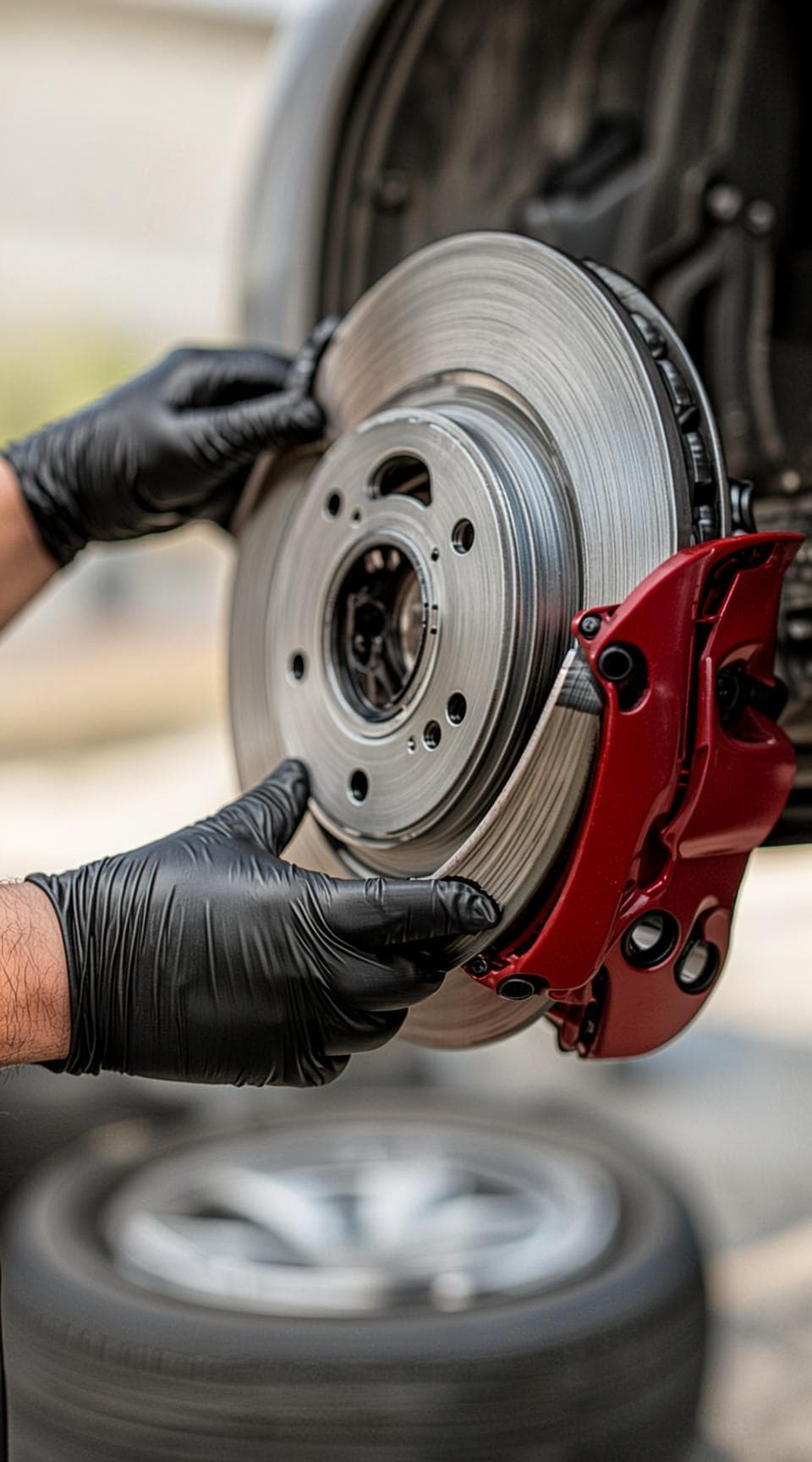
What's included
- Front and/or rear brake pads
- Front and/or rear rotors
- Seized or leaking calipers
- ABS sensor diagnosis and replacement
- Brake fluid flush and replacement
Brake Pads
The part that wears out first: it clamps the rotor to stop the wheel every time you brake. A worn pad shows up as a sharp, constant squeal, or a longer stopping distance than before. Most pads also have a metal wear indicator that scrapes the rotor once the limit is reached — that's the signal not to ignore. Typical lifespan: 50,000 to 80,000 km depending on driving style.
Brake Rotors
The rotor is the surface the pads clamp onto. A worn or warped rotor is felt while braking: a vibration in the pedal or steering wheel, especially at highway speed, usually points to a rotor deformed by heat. We replace rotors and pads together most of the time — it gives the best result and avoids uneven wear on new pads riding against an old rotor.
Brake Calipers
The caliper holds the pads and presses them against the rotor. A seized caliper brakes harder on one side than the other — the vehicle may pull slightly under braking, and one wheel wears faster than the other. A leaking caliper drops the brake fluid level and softens the pedal. Either way, our technician diagnoses it before charging anything.
ABS Brakes
The ABS (anti-lock braking) system keeps the wheels from locking up during hard braking, so you keep control of the vehicle. An ABS light on the dash almost always comes from a dirty or faulty wheel-speed sensor, not the whole system — that's what our technician diagnoses and replaces at home. (For a failure of the ABS module itself, much rarer, we'll honestly point you to the right shop.)
Brake Fluid
The fluid carries pedal pressure to the calipers. Over time it absorbs moisture, which lowers its boiling point and can make the pedal feel spongy. It's generally flushed every 2 to 3 years, or per the manufacturer's recommendation. A flush is included when needed with a pad and rotor replacement.
Pad Types: Organic, Semi-Metallic, Ceramic
Organic pads are quiet but wear faster. Semi-metallic pads offer good bite and heat resistance but produce more dust. Ceramic pads are quiet, clean and long-lasting. The right choice depends on your vehicle and driving: the online quote offers three tiers to compare.
Front or Rear Brakes?
The front brakes do most of the stopping and generally wear faster. The rear brakes wear more slowly but shouldn't be neglected: they're always checked at the same time. The online quote lets you choose front, rear or both.
Brakes and the Quebec Winter
Salt and moisture corrode rotors and seize calipers, two causes of uneven wear. A spring inspection after winter helps spot corrosion before brakes wear out prematurely.
Frequently asked questions
- What's the difference between brake pads and rotors?
- The pad is the part that wears out and gets replaced most often; the rotor is the surface it clamps onto. We usually replace both together for optimal braking, but pads alone are sometimes enough if the rotor is still in good shape.
- How do I know if my brake pads are worn?
- A sharp, constant squeal (the wear indicator scraping), a longer stopping distance, or a pedal that goes lower than before. Our online diagnostic helps tell the difference in 2 minutes.
- What is the ABS brake system, and why is the light on?
- ABS keeps the wheels from locking up during hard braking. The light almost always comes on because of a faulty wheel-speed sensor — a service we offer at home — rather than the whole ABS module.
- How often should brake rotors be replaced?
- There's no fixed mileage: it depends on wear and vibration while braking. Many rotors get replaced along with the pads, roughly every 50,000 to 100,000 km.
- Why do my brakes work harder in summer?
- More kilometres driven, extra luggage or a trailer, trips to the cottage often on hilly roads: all of this puts more strain on your brakes than typical city driving. It's the time of year when a quick inspection avoids bad surprises.
- How long does a brake job take?
- Between 1 and 2 hours depending on the service (one axle or both, pads only or pads + rotors).
- Does the price include parts and labor?
- Yes, the online quote shows an all-in price (parts, labor, taxes) before you even book.
- Why do my brakes squeal?
- A sharp, constant squeal often comes from the pads' metal wear indicator. A light squeak on a damp morning can also come from a thin layer of rust on the rotors that disappears after a few stops. If it persists, have the pads checked.
- Why does the steering wheel or pedal vibrate when I brake?
- A vibration under braking most often comes from a warped rotor or one with uneven thickness. Rotors are generally replaced along with the pads.
- My brake pedal is soft or sinks to the floor — what should I do?
- Don't drive, and have the vehicle checked. A spongy pedal can indicate air or moisture in the system, a low fluid level or a leak.
- Can I drive with very worn pads?
- It's not recommended. Once the lining is gone, metal rubs directly on the rotor: braking is less effective and the rotor gets damaged, which costs more to fix.
- How long do brake pads last?
- Often between 50,000 and 80,000 km, depending on driving style, vehicle weight and pad type. City driving with lots of stops wears them faster.
Ready to book?
Get your exact price in 2 minutes — parts, labor and taxes included.
Get My QuoteOther services: Battery · Alternator & Starter · Spark Plugs · Serpentine Belt · Oil Change · Wheel Bearing · Shocks & Struts · Radiator · Sway Bar Links · Tie Rod Ends · Brake Caliper